
Many leaders of major corporations and banks such as Vingroup, Techcombank, SHB, and ABBank have expressed optimism about the long-term prospects of Vietnam’s real estate market.
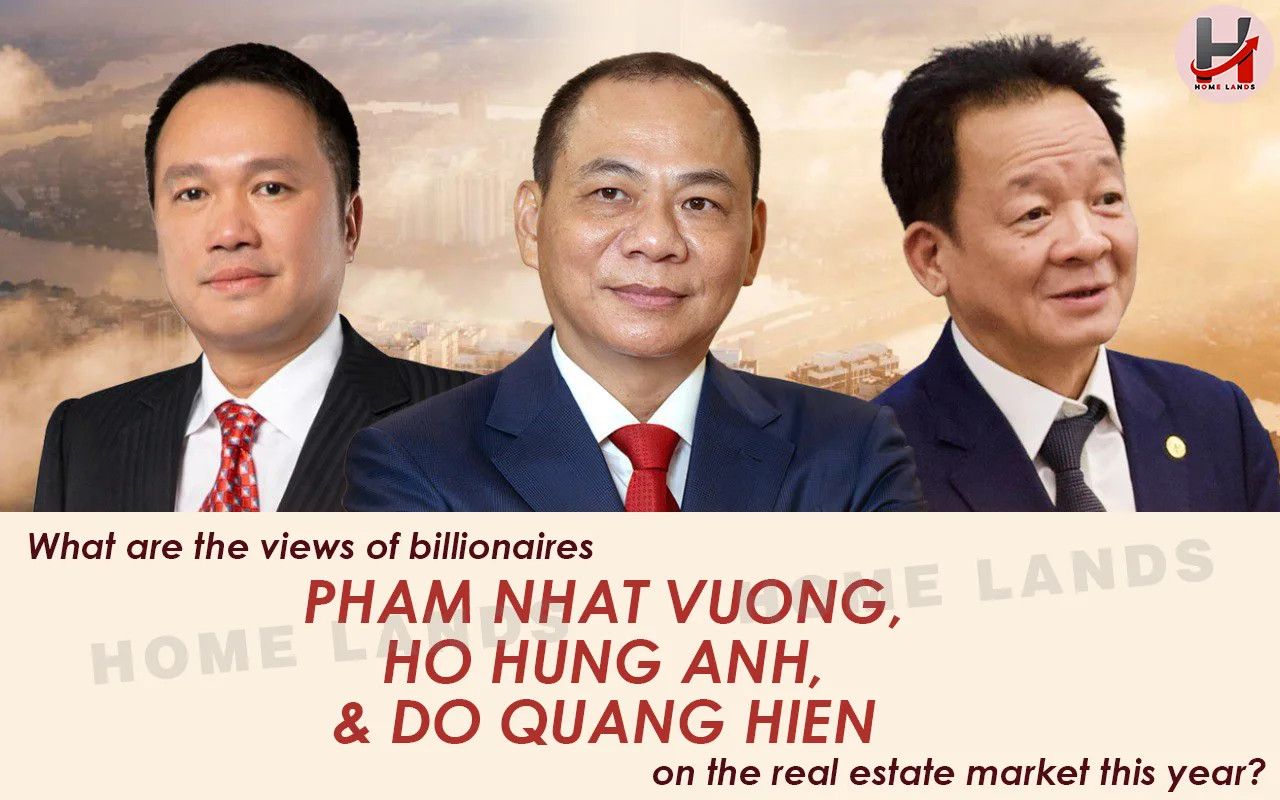
As the 2025 Annual General Meeting (AGM) season begins, the outlook for the real estate market is one of the most discussed topics among shareholders. During the meetings, Mr. Pham Nhat Vuong, Mr.Ho Hung Anh, and Mr.Do Quang Hien all gave positive assessments of the market prospects for this year.
Mr. Pham Nhat Vuong: “The real estate market is recovering, and Vingroup’s revenue will soar.”
At Vingroup’s 2025 AGM, Ms. Nguyen Thi Hien, the Group’s Chief Accountant, stated that real estate will continue to play a key role in the company’s revenue structure this year.
Responding to shareholders’ questions about the 2025 revenue plan — nearly double that of 2024 — Chairman Pham Nhat Vuong said this goal is both ambitious and realistic based on the market’s recovery outlook.
“This goal is obviously very high, and whether we achieve it or not, no one can be certain. However, we are determined not only to meet it but to exceed it. The basis for this is the clear recovery of the real estate market and a sharp increase in revenue,” Mr. Vượng said.
Regarding real estate development strategy, the Chairman said Vingroup aims to develop large urban areas that simultaneously meet infrastructure needs, ESG standards, smart city requirements, and provide a high-quality living environment for residents.
“Currently, Vingroup’s new projects target scales of several thousand hectares, located far from city centers. We no longer develop small projects near the city center. Instead, we choose to go further out and find ways to connect infrastructure,” Mr. Vuong said.
At the same time, the group is building a transportation ecosystem including buses, electric vehicles, taxis, etc., to support convenient mobility for residents and improve quality of life.
Mr. Vuong hopes that this integrated urban area model will become the new standard for Vietnam’s real estate market. “In fact, it has been proven that today any company building urban areas must add many amenities — something that did not exist 20 years ago,” he said.
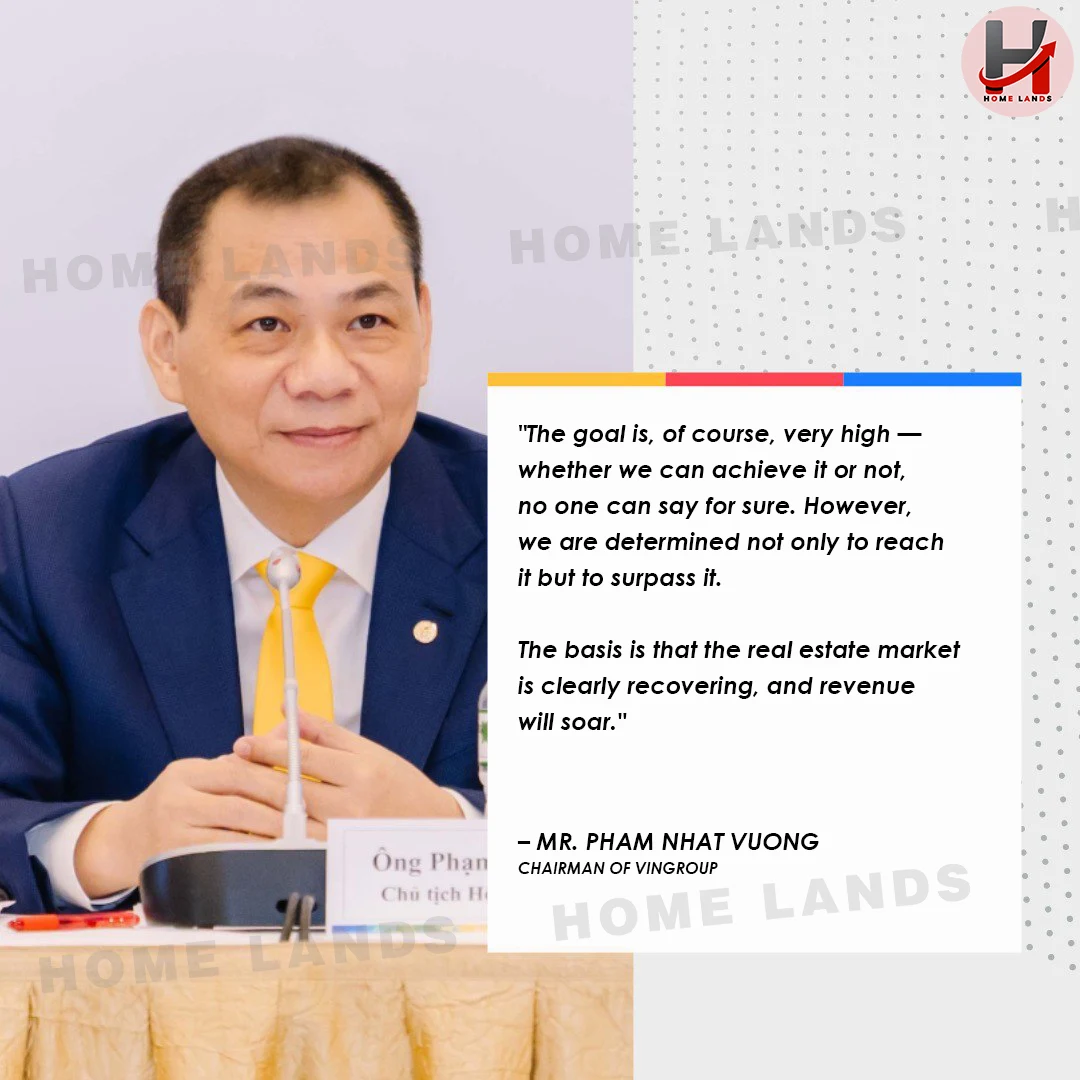
Billionaire Ho Hung Anh: The real estate sector is not directly affected by the trade war
According to Techcombank’s Q1 2025 financial report, the bank’s real estate credit balance reached VND 214.8 trillion, the highest in the banking system today. During the discussion session of Techcombank’s 2025 Annual General Meeting, many shareholders expressed interest in the real estate sector’s outlook and the bank’s ability to recover loans from this group of clients.
Responding to shareholders, Mr. Ho Hung Anh, Chairman of the Board of Directors of Techcombank, stated that in the short term, the real estate sector would not be directly affected by global trade tensions. However, if instability persists, the sector could still face impacts.
The Techcombank Chairman assessed that, in the near future, the real estate market is unlikely to make a breakthrough or return to the pre-crisis phase as some might hope. Nonetheless, the market has overcome its most challenging period, with housing demand rebounding, purchasing power improving, and the Government ramping up infrastructure investment.
Mr. Ho Hung Anh also shared that the bank is currently offering interest rate support to some real estate businesses during this phase. As the economy recovers, the market gradually warms up, and business activities stabilize, interest rates will be adjusted accordingly.
“Techcombank will certainly recover the amounts it has supported in the near future,” Mr. Ho Hung Anh emphasized.
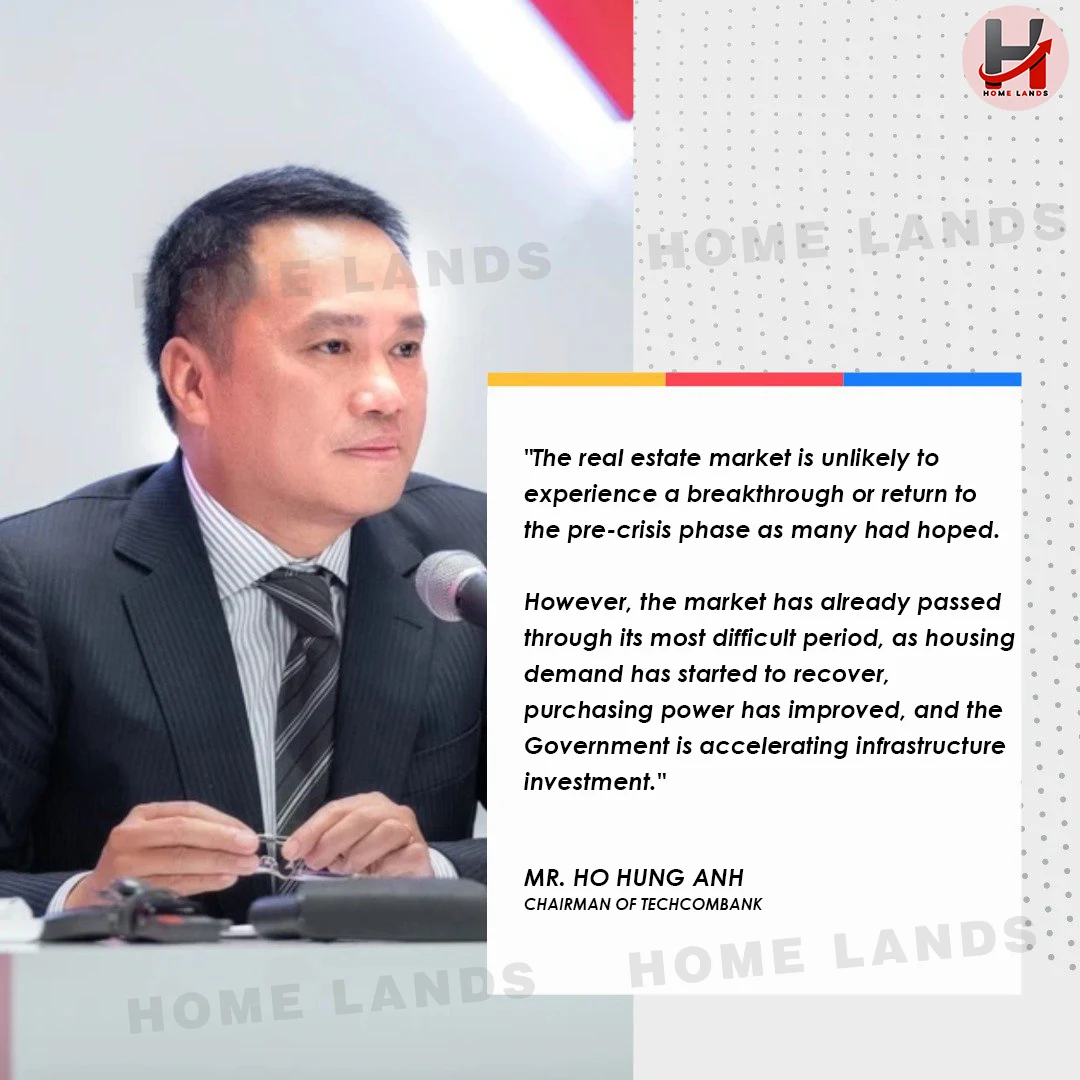
Do Quang Hien: The Real Estate Sector Still Has Great Potential
Sharing at the 2025 Annual General Meeting on the afternoon of April 22, Mr.Do Quang Hien – Chairman of the Board of Directors of Saigon – Hanoi Commercial Joint Stock Bank (SHB), assessed that the long-term prospects of the Vietnamese real estate sector remain very positive. He also emphasized that real estate projects financed by SHB are all guaranteed to be efficient and safe.
According to Mr. Hien, real estate has long been evaluated by economists and industry experts as a sector with good prospects. “There may be periods of ups and downs in real estate, but in the long term, the demand for housing, commerce, services, and recreation among the people is always there,” he said. He also noted that the rate of real estate usage among Vietnamese people is still low compared to many countries in the region.
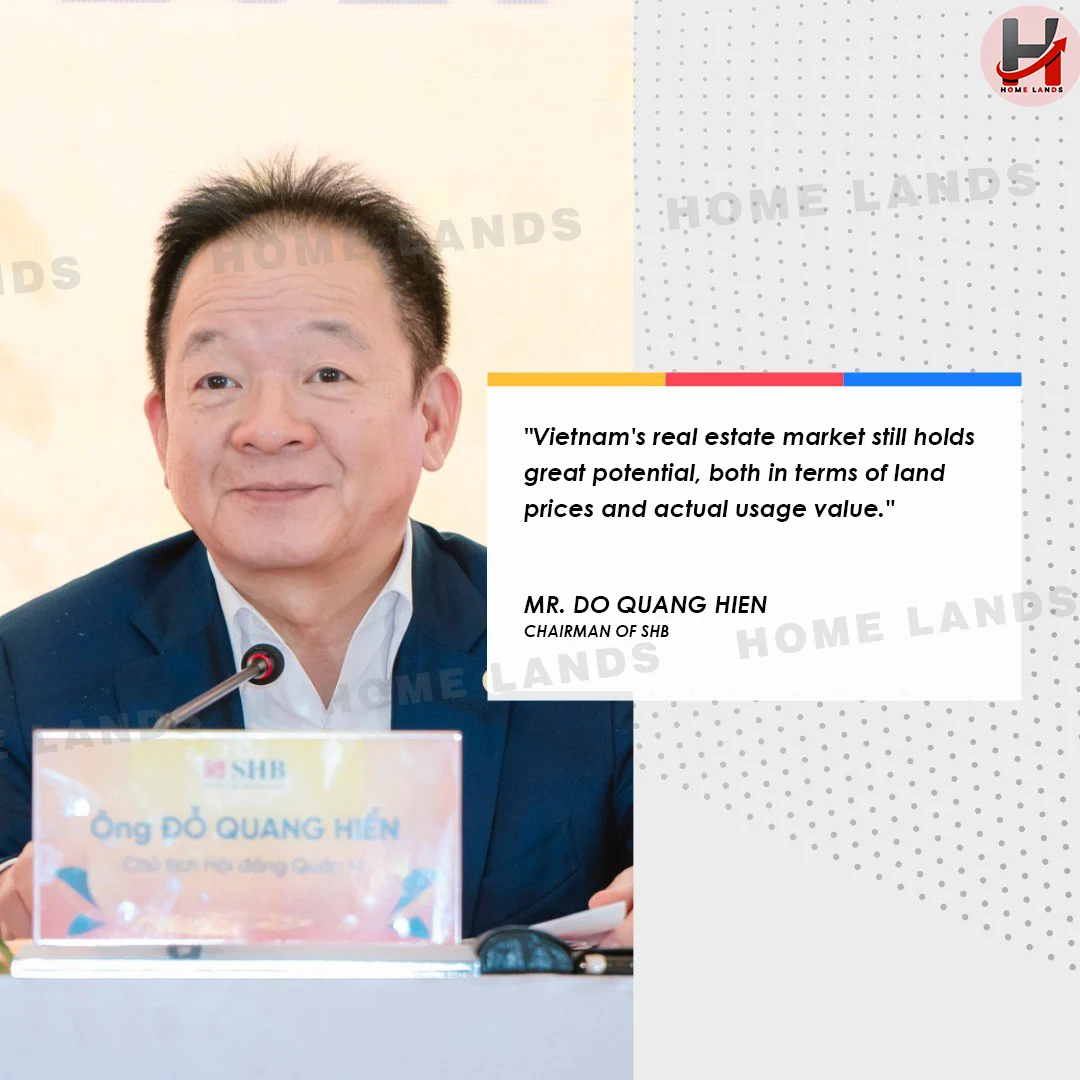
Therefore, the SHB Chairman concluded that the prospects of Vietnam’s real estate market remain very promising, both in terms of land prices and actual usage value.
Regarding real estate credit activities, Ms. Ngo Thu Ha, CEO of SHB, said that outstanding loans in this sector (including real estate consumer loans) currently account for about 24.5% of the bank’s total credit portfolio. Of this, the non-performing loan (NPL) ratio is only 0.1%.
“Real estate loans at SHB are very safe” Ms. Ha affirmed. Currently, the loan-to-collateral ratio at SHB is about 47%, indicating that the bank is maintaining good safety control in its credit activities.
ABBank Leadership: “Real Estate Never Dies”
At ABBank’s 2025 Annual General Meeting of Shareholders, Mr.Vu Van Tien, Vice Chairman of the Board of Directors, expressed an optimistic view about the long-term prospects of the real estate market.
“I have been involved in real estate for many years. I affirm that real estate never dies; there’s still room for development for decades to come,” Mr.Vu Van Tien said.

According to Mr. Tien, real estate continues to attract interest not only in Vietnam but also in developed markets such as the United States, where real estate transactions have been profitable even after hundreds of years of market development.
Regarding ABBank’s credit activities, he said that the bank’s management always requires that loans be secured by collateral—prioritizing cash, gold, or real estate. In addition to real estate, ABBank also accepts factories as collateral, but it requires a thorough assessment of the factory’s long-term development strategy, export potential, and ability to avoid risks such as taxation.